A ladder rack is your work vehicle’s backbone, but picking the wrong one leaves you stranded. You need solid steel, easy installation, and a weight limit that matches your daily haul. The Universal Van Roof and StarONE deliver, clamping on fast with capacities up to 800 pounds. So which one earns a permanent spot on your roof?
| Universal Van Roof Ladder Rack White 2 Bar Set |  | Best Budget Pick | Load Capacity: 700 lbs | Installation: No-drill, clamps to drip rails | Material: Heavy-duty steel, white powder coat | VIEW LATEST PRICE | Read Our Analysis |
| StarONE Van Ladder Rack Fit for 2015‑2026 Ford Transit 150/250/350 |  | Best Overall | Load Capacity: 800 lbs | Installation: No-drill, bolts to factory roof rails | Material: Alloy steel brackets, white | VIEW LATEST PRICE | Read Our Analysis |
More Details on Our Top Picks
Universal Van Roof Ladder Rack White 2 Bar Set
If you’re on a budget but still want a heavy duty rack, this Universal Van Roof Ladder Rack delivers serious value. It’s built from heavy-duty steel with a weather-resistant white powder coat, so you can haul up to 700 lbs without worrying about rust. This rack works on full-size vans like Chevy Express, Ford E-Series, or GMC Savana. You just need rain gutters. And here’s the best part: no drilling required. Clamps with rubber covers attach directly to your drip rails, protecting them from wear. You’ll get two crossbars, ladder stoppers, straps, and cushioning strips. Assembly takes minutes.
- Load Capacity:700 lbs
- Installation:No-drill, clamps to drip rails
- Material:Heavy-duty steel, white powder coat
- Crossbar Count:2 bars
- Protective Features:Rubber clamp covers, cushioning strips
- Cargo Securing:Ladder stoppers, fixed straps, guides
- Additional Feature:Adjustable length 41.5-70 inches
- Additional Feature:No-drill drip rail clamps
- Additional Feature:1-year warranty included
StarONE Van Ladder Rack Fit for 2015‑2026 Ford Transit 150/250/350
For Ford Transit owners, the StarONE Van Ladder Rack is built specifically for your 2015-2026 150/250/350 model, not the Connect. You’re getting a 50-inch, 45-pound white setup that clamps onto factory roof rails, no drilling needed. That 800-pound capacity means you’ll toss ladders, piping, or lumber up there without sweating the structural limits.
The three-bar design frees up your interior completely, while anti-scratch rubber strips and waterproof gaskets keep both your gear and your van’s roof safe from wear. You’ll appreciate the rear roller for sliding heavy loads up, plus the hook-and-loop straps and ladder stops hold everything snug during highway hauls. Installation? Just bolt it on with the included hardware and manual, roughly an hour of your time. Backed by a 1-year warranty and a solid 4.2-star rating from 60 owners, this rack handles construction sites and harsh weather with stable confidence.
- Load Capacity:800 lbs
- Installation:No-drill, bolts to factory roof rails
- Material:Alloy steel brackets, white
- Crossbar Count:3 bars
- Protective Features:Anti-scratch rubber strips, rubber gaskets
- Cargo Securing:Ladder stops, hook-and-loop straps, guides, rear roller
- Additional Feature:Vehicle-specific Ford Transit fit
- Additional Feature:Rear cargo roller included
- Additional Feature:Pre-drilled mounting points
Factors to Consider When Choosing a Ladder Rack for Van, Trailers, or Truck Caps
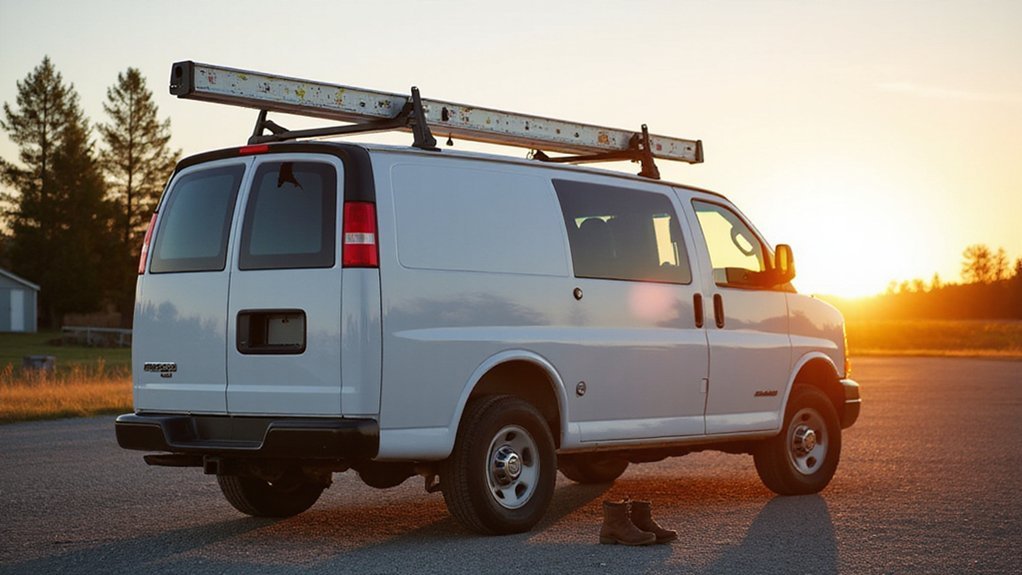
You can’t just grab any ladder rack and bolt it on; you need to match it to your vehicle’s make, model, and roof or cap style. Pay close attention to the weight capacity limits, because overloading can wreck your rack or worse, cause a road hazard. And you’ll want a rack with solid steel or aluminum construction, easy installation, and reliable cargo security features to keep your gear locked down tight.
Weight Capacity Limits
One major factor you can’t overlook is weight capacity limits. Always check the maximum load a rack can handle, since exceeding it risks damaging your rack, vehicle, or both. That’s a safety hazard you don’t want.
Different models vary, with capacities ranging from around 700 lbs to over 800 lbs. So choose one that fits your cargo’s heft. And make sure the manufacturer clearly specifies and verifies that number for guaranteed safe use.
But don’t just load it up carelessly. Distribute weight evenly across the rack to maintain maximum capacity and avoid undue stress on any single point. This simple step keeps everything stable. So check those specs, balance your load, and you’re good to haul!
Vehicle Compatibility Check
Weight capacity is critical, but it only matters if the rack actually fits your van, trailer, or truck cap. So, before you buy, check your vehicle’s make, model, and year against the manufacturer’s specs. Does it have factory roof rails, gutters, or specific mounting points? You’ll need those for a secure install. Also, confirm the rack’s dimensions match your roof’s size and configuration. A mismatch means you’re stuck with hardware that won’t work. And don’t forget load limits. Verify the rack supports your heaviest ladder or equipment. Confirm its mounting system jives with your vehicle’s design. For example, a van with a peaked roof needs a different approach than a flat truck cap. Review those specs carefully, and you’ll avoid a costly mismatch.
Material and Build Quality
Since the material and build quality directly determine how long your rack lasts and how well it performs, let’s dig into what really matters here. You generally have two main choices: heavy-duty steel or aluminum. Steel wins for raw strength, easily supporting hundreds to over a thousand pounds without deformation. But it’s heavier, impacting your fuel efficiency. Aluminum, on the other hand, is lighter and resists rust naturally, making installation a breeze but often sacrificing some load capacity.
Look for specific features that signal a long life. You want reinforced joints, not cheap welds. Check for anti-corrosion finishes or waterproof gaskets that keep weather at bay. Don’t skip the details. A rack that lacks these will wear down fast, leaving you with a sagging, rusted mess. Choose a material that matches your load needs, not your ego!
Installation Method Required
Now that you know what materials offer the best longevity, let’s talk about how you actually get that rack on your van, trailer, or truck cap. Your installation method boils down to three choices: clamp-on, bolt-on, or drilling.
Clamp-on racks are your quickest bet. You attach them directly to gutter rails or factory roof rails with no drilling required. Just tighten the clamps, and you’re done.
Bolt-on racks offer a more permanent fit. You secure them into pre-drilled holes or mounting points with hardware. This method gives you rock-solid stability, but it takes a bit more effort.
Drilling requires creating holes in your roof or cap. You’ll need special tools and some skill, but the result is a custom, ultra-secure mount.
Consider your comfort level. Some systems install in minutes with minimal tools, while others demand more extensive steps. Choose based on how permanent you want the setup to be.
Cargo Security Features
When you’re hauling ladders, pipes, or lumber on your van or truck cap, cargo security isn’t just a nice-to-have—it’s a must. Start with secure tie-down points: use straps and hooks to lock your load in place, preventing shifts during sudden stops or corners. Integrated ladder stops and guides keep long items aligned, so they won’t wander over bumps. You’ll also want adjustable clamp or mounting systems—these tighten the fit to your specific vehicle, minimizing movement and rattling.
Don’t overlook weather-resistant padding and rubber gaskets; they shield your cargo from water intrusion and stop annoying loosening from vibration. Finally, check for reinforced support and weight capacity indicators. These tell you the rack’s safe limit, so heavy gear won’t risk detachment. A secure rack means you drive with confidence, not worry. That’s peace of mind you can count on.
Roof Rail Requirements
Before you pick a ladder rack, you’ve got to check your roof. Not all roofs play nice with every rack. Some racks demand factory-installed roof rails, while others need rain gutters. Measure your roof rails’ dimensions and weight capacity. You don’t want a rack that exceeds what your rails can handle, or you’ll risk instability and cargo damage.
If your roof lacks existing mounting points, no-drill or clamp-on options are your best bet. They preserve your factory finish and save you from drilling holes. Properly fitted roof rails lock everything down, keeping your ladders and long cargo secure on the road. So, confirm your roof’s setup first. It’s a small step that prevents big headaches later. Match the rack to your roof, not the other way around. That’s the smart play for safety and peace of mind.
Adjustability and Fit
Because every van and truck cap has its own unique shape and size, you need a ladder rack that bends to fit your setup, not the other way around. An adjustable rack lets you customize its length to match various van widths and roof curves, so you get a snug, secure fit every time. Look for models with clamps or mounting mechanisms that adapt to different roof contours, especially if you have rain gutters or factory roof rails. This flexibility isn’t a luxury; it’s a necessity. Here’s what to check:
- Length range: Guarantee the rack’s maximum adjustable width handles your cargo and vehicle dimensions.
- Clamp design: It should grip tightly without damaging your roof’s finish.
Proper adjustability stops your load from shifting during transit. You want a rack that locks down, not one that leaves you guessing.
Warranty Coverage Period
Ever wonder how much protection you’re really getting after the sale? Warranty coverage periods range from one to several years, so you need to check the fine print. A longer warranty gives you extended peace of mind if defects or damages pop up. But what’s included? Look for parts, labor, or replacement services. A all-encompassing warranty usually means the manufacturer’s confident in their ladder rack’s durability. A short warranty? That might signal limited coverage and higher future costs for you. So, don’t just glance at the length. Verify what’s covered, because a solid warranty saves you money and hassle down the road. It’s your safety net, after all. Choose wisely, and you won’t regret it.